
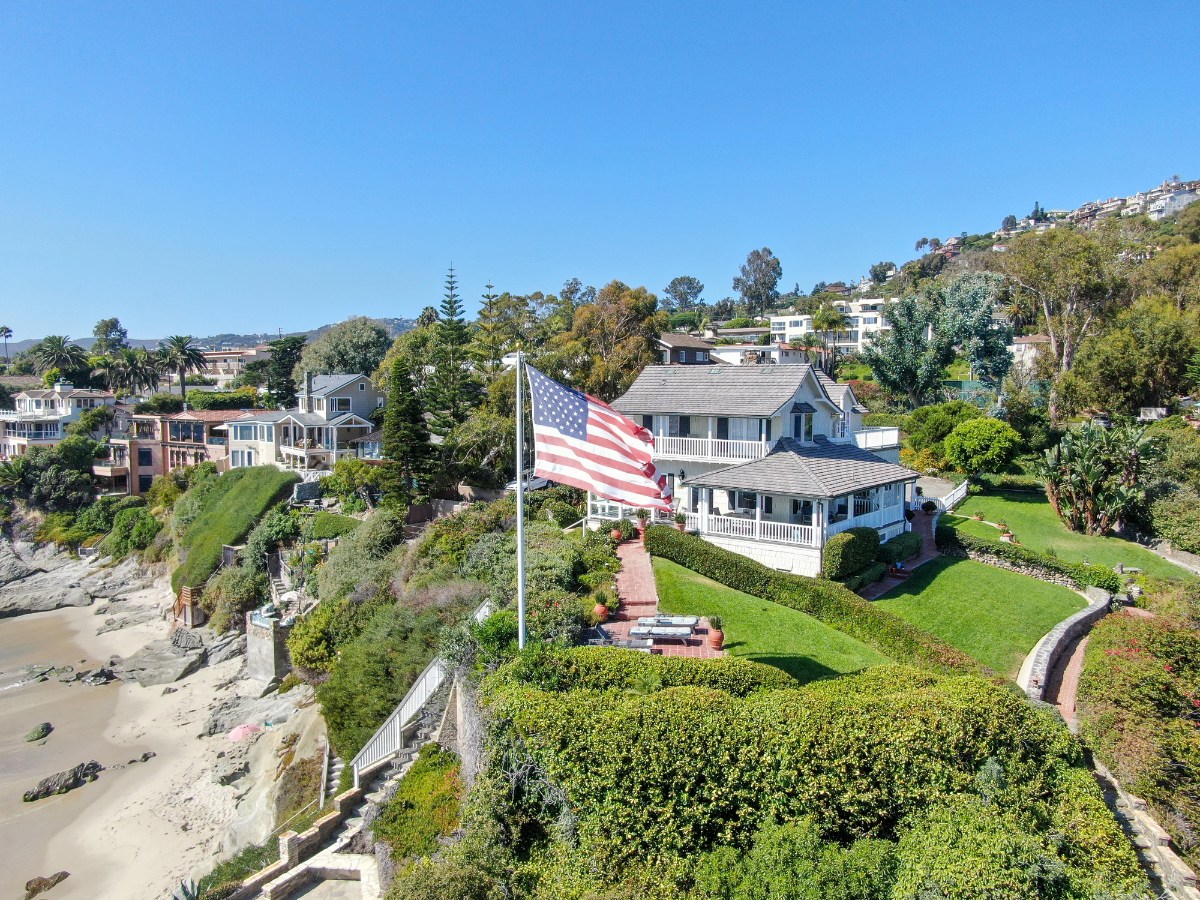
Everyone in Laguna Beach has the right to enjoy the city’s breathtaking views.
Laguna Beach is a place of rare beauty, but behind every postcard view lies a framework of carefully enforced rules. If you are buying, building a home, or investing in Laguna Beach real estate, understanding local height limits and view corridor regulations is essential.
In the guide ahead, we’ll break down how these rules in Laguna Beach shape what’s possible, and how experienced Laguna Beach real estate agents can help you protect your vision and your investment.
Table of Contents:
Essential insights
|
THE FRAMEWORK BEHIND THE VIEW
Laguna Beach’s visual harmony is not accidental. It is protected by carefully defined rules embedded in the city’s Municipal Code, which governs building height, massing, and view preservation across residential neighborhoods.
Height restrictions generally limit flat-roofed homes to 18 feet and pitched-roof designs to 24 feet. These limits work in concert with view protection policies that evaluate how a proposed structure may affect established guidelines. For buyers exploring Laguna Beach real estate, these standards directly influence what can be built, remodeled, or expanded.
The intent behind these Laguna Beach rules is rooted in preservation. Community character, coastal openness, neighborhood compatibility, and responsible development all guide how projects are reviewed. The result is a cityscape that is scaled and respectful of its setting.
Who oversees these rules?
Oversight is shared across several city bodies. The Planning Department administers the Municipal Code, while the Design Review Board evaluations architectural compatibility and visual impact. View preservation staff provide specialized analysis to ensure protected vistas remain intact. Together, they uphold these Laguna Beach rules with a level of care that reflects the city’s long-term vision.
BUILDING HEIGHT LIMITS
Height limitations in Laguna Beach are more than guidelines; they are regulatory boundaries that influence what’s possible on every parcel of land. If you are entering the market with plans to build, expand, or elevate a view, understanding these limits is part of your due diligence.
Residential and commercial standards
The City of Laguna Beach applies two primary height caps in residential zones: 18 feet for flat-roofted homes and 24 feet for homes with pitched roofs. They are legally enforced maximums based on architectural design. In select commercial or mixed-use areas, buildings may be permitted additional height, but with stringent oversight and view impact analysis.
Importantly, no structure in Laguna Beach may exceed 36 feet in total height, regardless of zone, per Municipal Code 25.51.010. This rule ensures that no building overwhelms its surroundings, maintaining visual cohesion and protecting neighborhood scale.
As you explore Laguna Beach real estate in mixed or transitional zones, it is critical to verify zoning maps, height overlays, and any applicable coastal development requirements early in the negotiation process.
How height is measured on sloped lots
Laguna Beach’s sloped terrain makes for some of the most breathtaking views in California. Unfortunately, it also paves the way to some of the most misunderstood height measurements. See, unlike flatland cities, Laguna Beach does not use a single reference point. Instead, height is measured using several criteria:
- The vertical distance between the highest point of the roof and the finished floor of the lowest level, or to the natural or finished grade, whichever results in a stricter limit.
- At the front lot line, height may be measured from the curb, street centerline, or property line, depending on which applies under current zoning chapters.
- For rear rot lines, height is assessed at every point along the boundary, not just a midpoint.
The result is a dynamic and often conservative evaluation. This is especially the case on hillside parcels, where usable vertical volume can be significantly reduced once grade is factored in. Should you find yourself drawn to an elevated lot (or two), consult a local architect early to map out realistic height envelopes under current Laguna Beach rules.
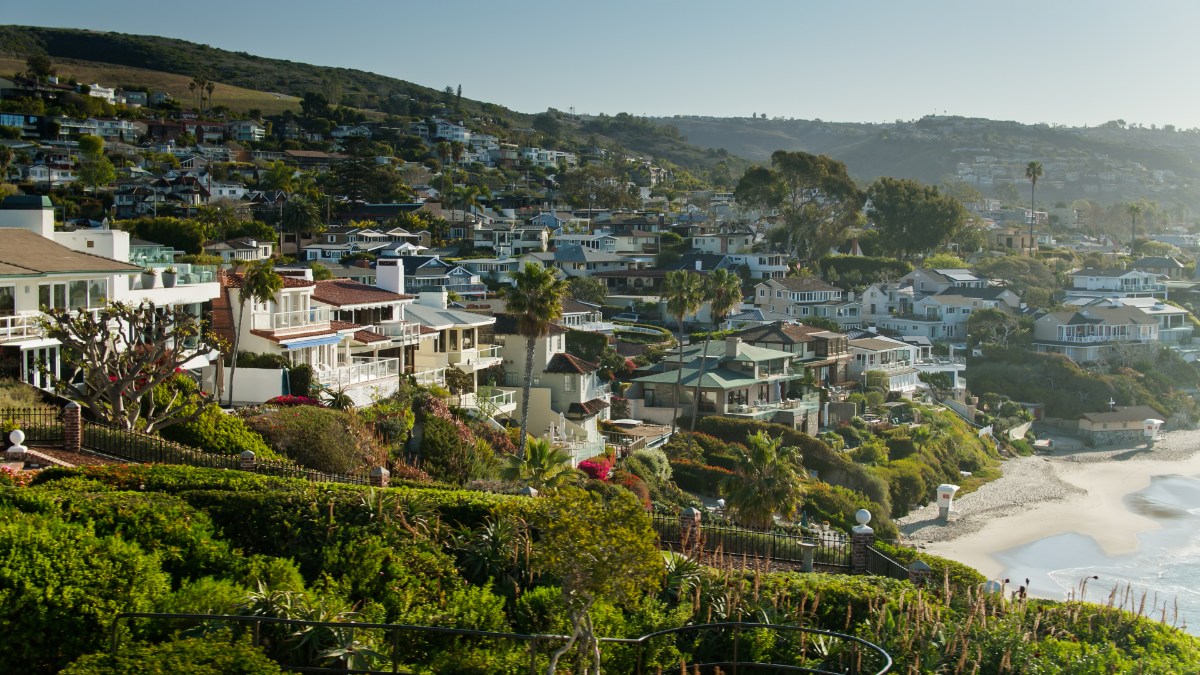
Measuring the heights of buildings on sloped lots can be complicated.
Restrictions for coastal parcels
If the parcel is located seaward of Pacific Coast Highway, an additional limitation applies: no part of the structure may rise above the finished elevation of the highway at the public right-of-way.
This rule protects public viewsheds from being blocked by new development and maintains the dramatic open sightlines that define the Laguna Beach coastline. For properties perched on oceanfront bluffs, this means even luxury home designs must be disciplined. Height, elevation, and roofline must all fall beneath the PCH elevation line.
Allowed height exceptions (non-habitable use only)
There are a few narrowly defined exceptions to the standard height limits. These are not intended for living space or aesthetic massing, but for functional architectural elements that support the home’s core systems.
With approval from the Design Review Board, the following may exceed maximum height:
- Elevator shafts and stair towers
- Chimneys, skylights, and ventilation structures
- Decorative spires, antennae, and flagpoles
Each exception must meet criteria under Chapter 25.05 and 25.51, and cannot be enclosed or used as additional square footage. Address these items early during early design phases if you are building or remodeling, not after submission.
Nonconforming homes: What they mean for renovation plans
Some older Laguna Beach homes, particularly those built before the current code framework, exceed today’s height limits. These are legally referred to as “nonconforming structures.”
While these homes are allowed to remain as-is, any major alteration (such as roof changes, added stories, or expanded footprints) may trigger a full compliance review. In some cases, portions of the home may be required to come into alignment with present-day Laguna Beach rules.
This often surprises buyers who assume “grandfathered-in” protections allow for flexible renovation. In reality, the city views major remodels as opportunities to restore harmony within the built environment, making early consultation with a planning expert or trusted Laguna Beach real estate agent crucial.
What buyers should do before closingIf you’re purchasing with an eye toward transformation, your due diligence should go far beyond standard title checks and inspections. Before closing, we recommend:
In a market where views are measured in both beauty and value, height is more than a design detail; it’s a defining parameter. Knowing how Laguna Beach rules interpret your lot’s potential ensures your home will be as timeless in form as it is in experience. |
VIEW PRESERVATION AND RESTORATION RULES
One of the most treasured aspects of Laguna Beach living is the uninterrupted sweep of ocean, canyon, and hillside views. The city’s View Preservation and Restoration ordinance (Municipal Code 12.16) exists to protect these sightlines from being permanently lost to unchecked vegetation growth on neighboring properties.
At its core, the ordinance reflects a simple principle: outward views and sunlight contribute to quality of life here. As a result, property owners have the right to preserve or restore significant views impaired by vegetation.
Two complementary protections
View Preservation (LBMC Chapter 12.16.040) is a process that allows a homeowner to document an unobstructed view corridor by filing for a Record of View. The city captures official photographs from selected viewing points inside the primary residence. These photos become a benchmark.
If vegetation grows into and significantly obstructs this documented view later, the benchmark enables the city to determine whether a violation has occurred.
|
Key points of View Preservation
|
If your prospective property enjoys an exceptional view you want to protect, it’s highly recommended to file a Record of View early. Do it before closing, if possible.
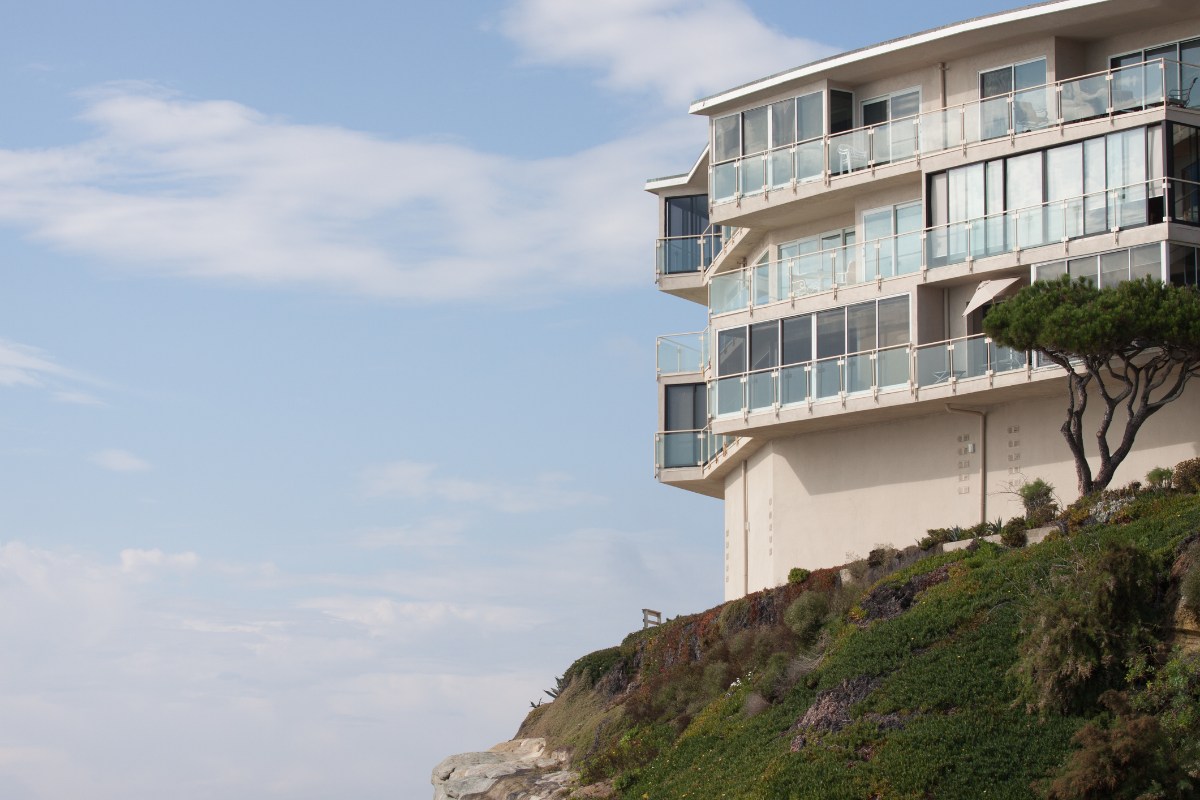
Views of the Pacific Ocean are considered protected under local ordinance.
View restoration (LBMC Chapter 12.16.050), on the other hand, gives a property owner the right to restore a pre-existing view that has already been impaired by vegetation. The process unfolds in two phases:
- Phase 1: Mediation
The claimant and the vegetation owner must attempt to reach a private agreement through facilitated mediation. City staff support this process, helping both parties communicate about trimming or removing obstructive vegetation. - Phase 2: Hearing before the View Restoration Committee
If mediation fails, a formal hearing may be requested before the city’s View Restoration Committee. The applicant must present documented evidence, including photographs of the current obstruction and photographs that show the view prior to the obstruction.
Evidence standards are strict.
- Photos must show the pre-existing view as of the date of property acquisition or November 4, 2003, whichever is earlier.
- Photos from real estate websites or enhanced images are not acceptable.
- Views from non-living spaces (i.e. garages, bathrooms, hallways) are not considered.
What counts as a protected view?
Under the ordinance, a “protected view” refers to views of the Pacific Ocean, major coastal natural features, and significant natural open space.
Vegetation that has grown into this view may become subject to restoration if it causes significant obstruction based on documented criteria. Importantly, structures and remodels are evaluated under separate Design Review Board processes; view preservation pertains specifically to vegetation.
How the city’s process works
The view claim process is designed to be fair and systematic.
- Initiation: The homeowner files either a Record of View (preservation) or a Notice of Intent to File (restoration) with the city.
- Documentation: City staff take official, standardized photographs of the view corridor.
- Meditation: Parties attempt an amicable resolution, facilitated if necessary.
- Committee review: If mediation fails for restoration claims, a hearing before the View Restoration Committee is held.
Limitations buyers should keep in mind
- The ordinance applies only to vegetation, not to structures or improvements. For structural view impacts, the Design Review Board process is the governing pathway.
- Without a Record of View on file, proving impairment later may be difficult.
- A Record of View must be done carefully. Once documented, it cannot be re-recorded if the view improves later.
- Preservation rights are attached to the property, not personal preference. Future owners may pursue claims, too.
What buyers should do when evaluating a propertyWhen assessing a view at a prospective purchase:
A view is more than an amenity in Laguna Beach. It’s a legacy of careful stewardship and thoughtful planning under the city’s rules. When you understand how these protections work and when to act, you will also be protecting your investment. |
YOUR ESSENTIAL DUE DILIGENCE CHECKLIST
Buyers drawn to Laguna Beach often arrive with vision, whether it’s building a dream home, restoring an architectural gem, or preserving a view. But every aspiration must align with the city’s regulatory framework. This due diligence checklist offers a clear, actionable guide for you to evaluate both opportunity and limitation.
Property-specific land use and zoning
- Verify zoning classification with the City of Laguna Beach Planning Department.
- Check for any overlay zones, such as historic, coastal, or hillside-specific designations.
- Review setback, height, and lot coverage regulations based on the specific parcel.
- Confirm if the property falls under coastal development permit requirements.
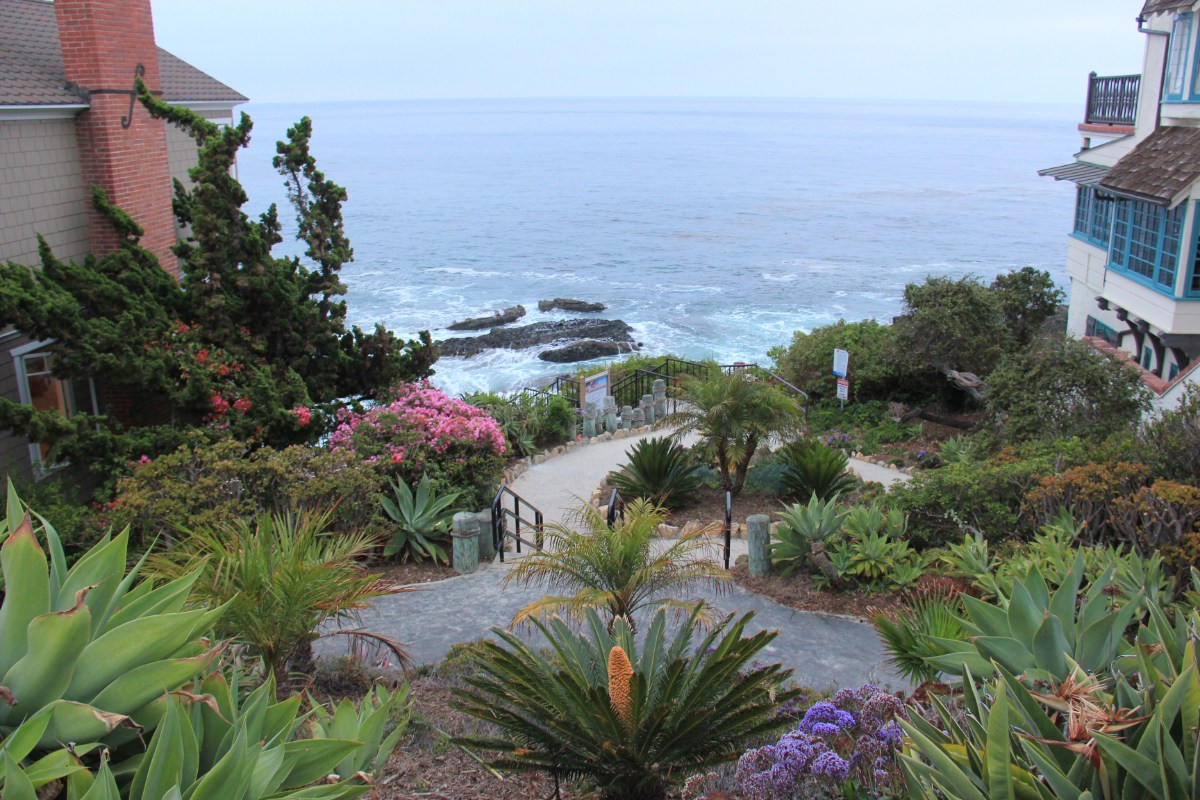
File a Record of View early if the property you’re buying doesn’t have one.
- Request a topographic survey to evaluate grade impacts on height limits.
- Understand applicable height caps (typically 18′ flat roof / 24′ pitched roof).
- If building near PCH, confirm whether the PCH elevation limit applies (seaward side).
- Check for existing Laguna Beach rules or code enforcement records tied to the property.
- Ask whether there is an active View Preservation Record on file.
- Inquire about past or pending View Restoration claims involving neighboring vegetation.
- Assess nearby landscaping for mature growth that could impact future sightlines.
- Consult with a specialist or city staff to understand enforcement limitations.
- Review past Design Review Board decisions on the property, if applicable.
- Determine if previous remodels triggered nonconforming status under current code.
- Consider a pre-purchase consultation with an architect experienced in Laguna Beach approvals.
- Budget for potential architectural, landscape, and elevation studies before submission.
- Request a permit history report from the city.
- Check for unpermitted structures or improvements on the lot.
- Confirm the status of any variances, easements, or recorded restrictions.
- Evaluate the title and plat maps to confirm lot lines, access points, and easements.
- Work with experienced Laguna Beach real estate agents who understand the local code, design preferences, and entitlement processes.
- Engage a real estate attorney or planner if the lot presents complex entitlements or historic status.
- For hillside or blufftop lots, consider a geotechnical engineer review for slope stability and soil conditions.
Thorough due diligence allows you to protect your investment and, at the same time, unlock the full lifestyle and architectural potential that Laguna Beach offers.
FAQs: Laguna Beach rules for height and view protection
|
YOUR VISION & VIEWS, PROTECTED BY EXPERTISE
Every lot in Laguna Beach tells a story, not just in views, but in what it allows, preserves, and restricts. A local real estate team will help you navigate the city’s height limits and view regulations with fluency, sensitivity, and foresight.
Shauna Covington and Leita Covington are here to help. As a mother-and-daughter team with deep roots in coastal Orange County, they offer clarity, responsiveness, and tailored guidance that will ensure you buy a home (and views) you love and can enjoy for years to come.
Connect with Shauna or Leita by calling 949.395.3037. You can also reach out to them here to learn more about Laguna Beach real estate.
Let's Connect